

Multisyllabic Decoding Check-Up & Practice | Reading Intervention Grades 4–8
Multisyllabic Decoding Check-Up & Practice | Reading Intervention Grades 4–8
Help older struggling readers work with two-syllable words—without creating separate word checks, recording sheets, and practice activities.
Do your upper elementary or middle school students read familiar short words but struggle when words become longer?
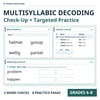
This Multisyllabic Decoding Check-Up & Targeted Practice resource gives you a simple, printable way to listen to students read selected two-syllable spelling patterns, record what you notice, and choose corresponding practice activities.
Designed for Grades 4–8, this resource is useful for special education, reading intervention, MTSS/RTI, one-on-one instruction, and targeted foundational-skills review.
WHAT'S INCLUDED
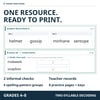
22 printable US Letter pages, including:
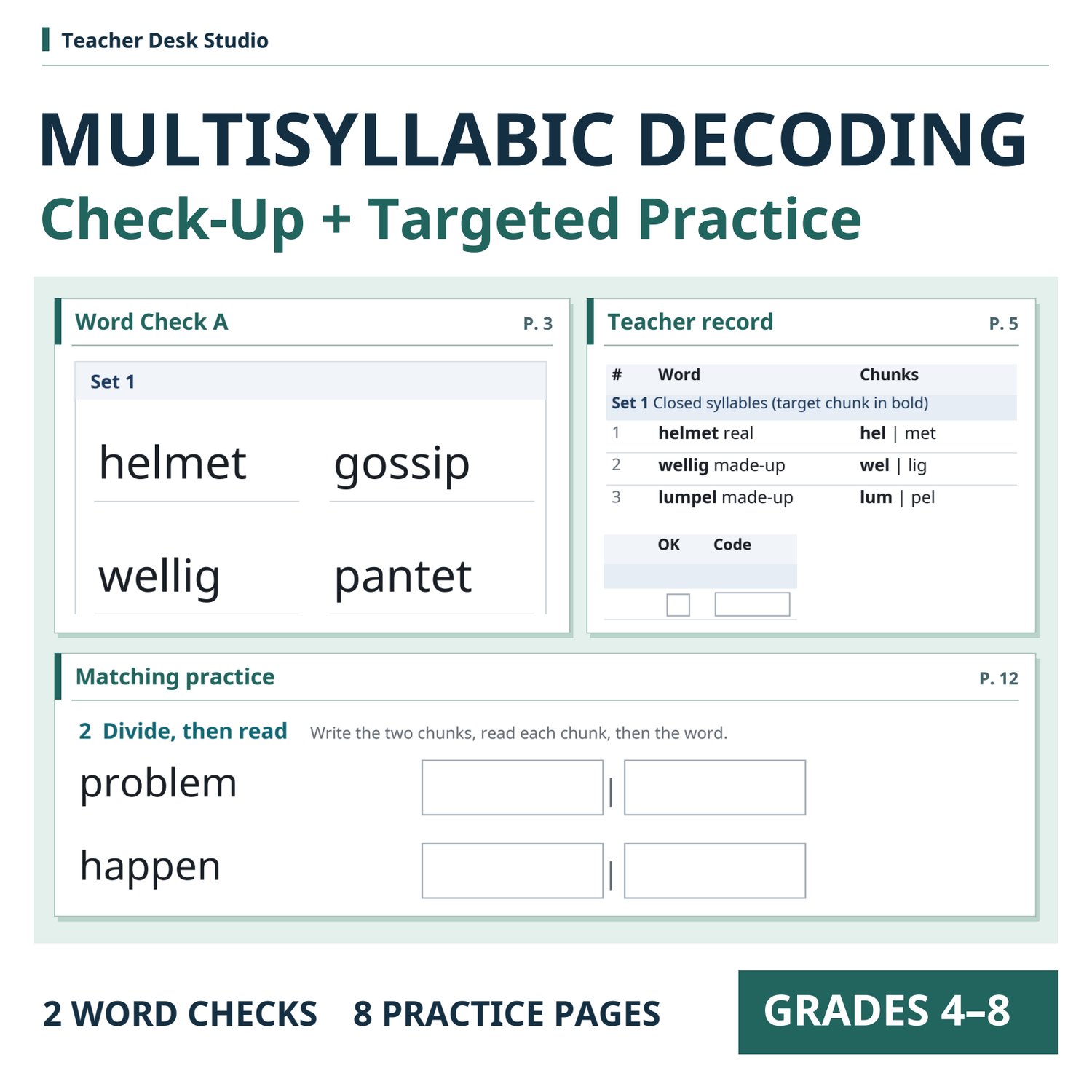
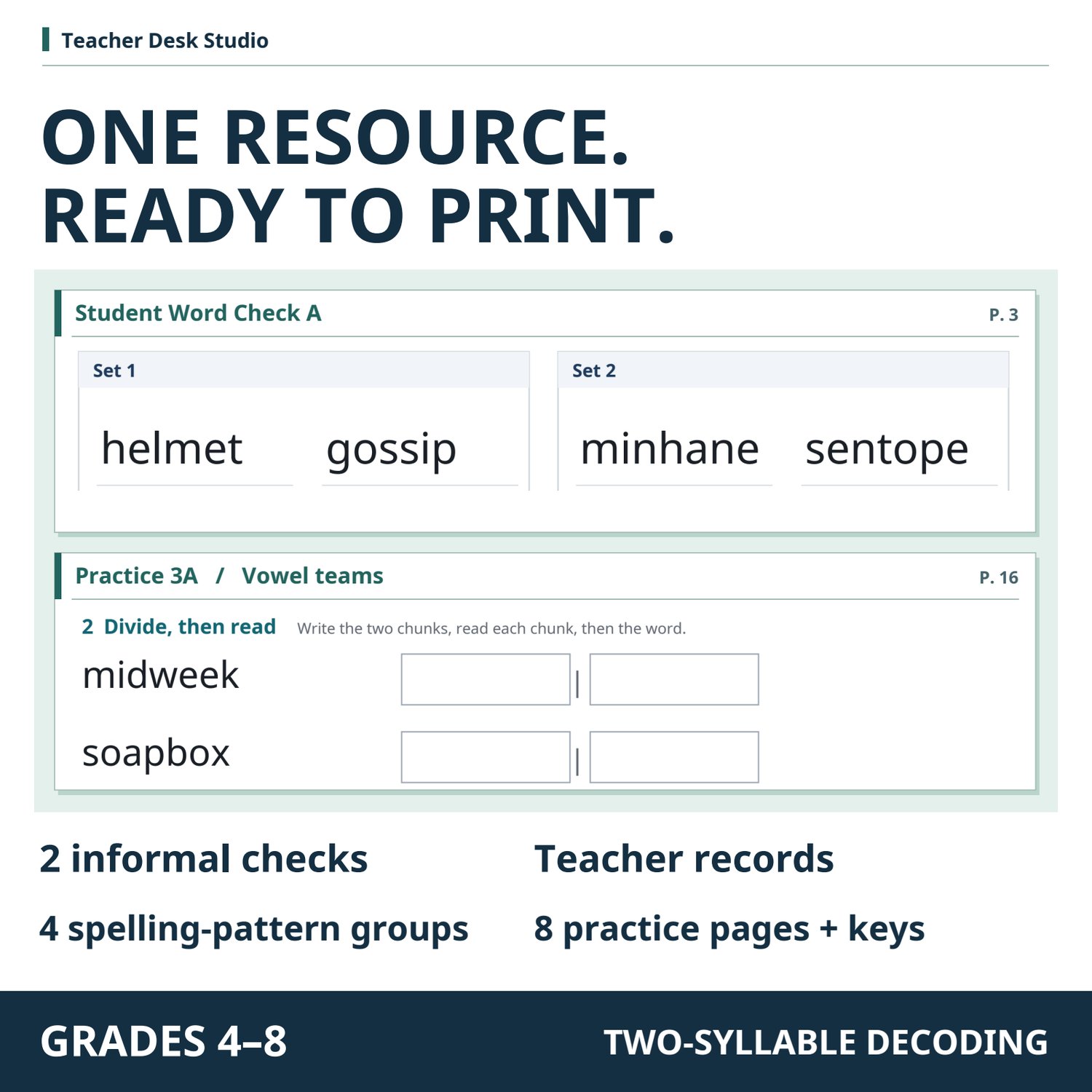
- 2 Informal Word Checks (Forms A & B): Each form includes 32 words—16 real words and 16 made-up words—organized into four spelling-pattern groups.
- Teacher Recording Sheets: Record correct responses, observed reading errors, and notes.
- Summary & Next-Step Guide: Review responses by spelling-pattern group to help choose a starting point for practice.
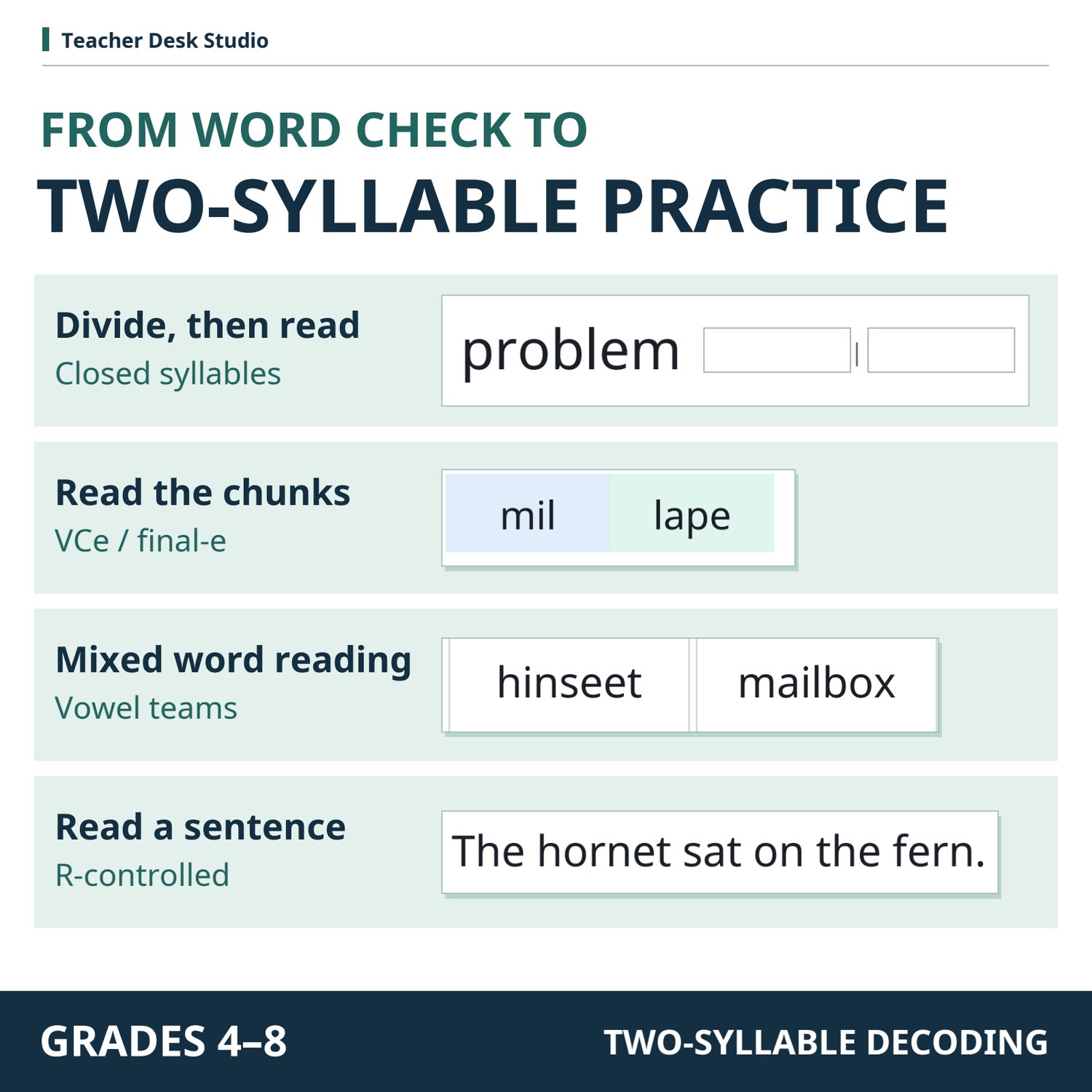
- 8 Student Practice Pages: Two pages per pattern group, featuring word reading, syllable chunking, mixed practice, and sentences.
- Teacher Quick-Start & Instructions: Guidance for using the word checks and practice pages.
- Answer Keys: Included for both word checks and the practice activities.
FOUR SPELLING-PATTERN GROUPS
- Closed Syllables — Short a, e, i, o, and u
- VCe / Final-e — a_e, i_e, and o_e
- Vowel Teams — ai, ay, ee, and oa
- R-Controlled Patterns — ar, or, er, ir, and ur
HOW TO USE
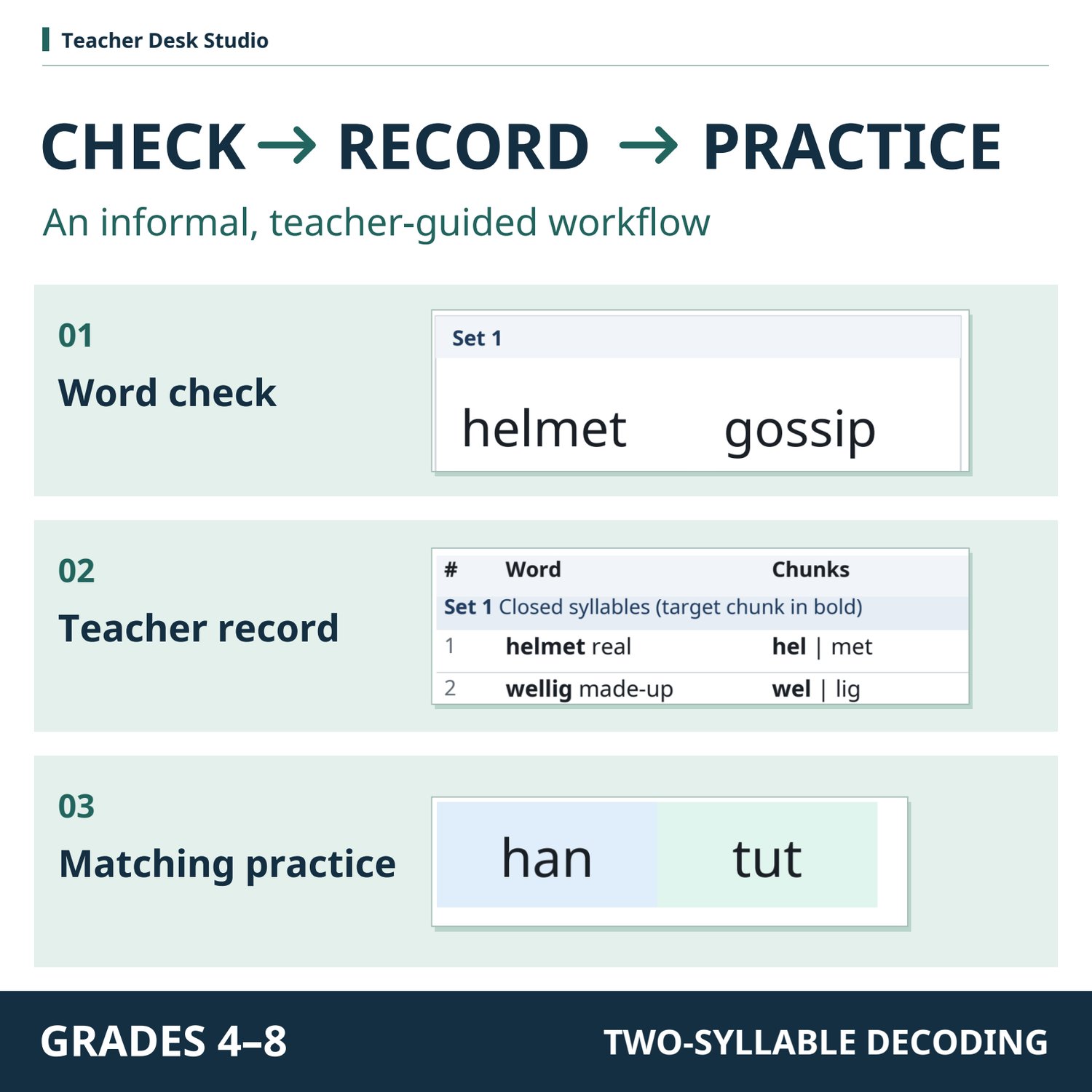
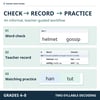
CHECK → RECORD → PRACTICE
Step 1: Check. Have the student read Word Check A aloud while you listen.
Step 2: Record. Use the teacher recording sheet to note correct words, errors, and observations.
Step 3: Choose a starting pattern. Review the summary and use your instructional judgment to choose corresponding practice.
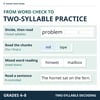
Step 4: Practice. Students work through sound checks, dividing and reading words, chunk reading, mixed word reading, and sentences.
Step 5: Revisit. Form B can provide a second informal look at the same spelling patterns on a later day.
IDEAL FOR
- Upper elementary reading intervention
- Middle school students needing foundational decoding practice
- Special education resource rooms
- MTSS / RTI supplemental instruction
- One-on-one tutoring
- Small-group skill review
WHY TEACHERS MAY FIND IT USEFUL
Everything is organized in one place. Instead of assembling separate word lists and practice sheets, you have a consistent teacher-guided workflow with print-ready student pages.
The resource uses a clean, uncluttered layout and includes both teacher and student materials.
FORMAT: Printable PDF
PAGES: 22
GRADES: 4–8
ANSWER KEYS: Included
PREPARATION: Print the pages needed for your instructional session.
IMPORTANT INFORMATION
This resource is an informal instructional aid, not a standardized or validated assessment. It does not diagnose dyslexia, establish grade-level performance, determine formal placement, or provide a validated measure of reading growth. Forms A and B have not been established as equivalent.
Students should already have foundational one-syllable decoding skills. This resource focuses on selected two-syllable patterns and does not constitute a complete reading intervention curriculum.
Created with AI assistance. Classroom testing and independent reading-specialist review have not been completed.