
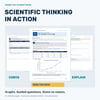
Scientific Method Worksheets | Middle School Graphing, CER & Error Analysis
What you get: A ZIP file (2 MB) with three printable PDFs (85 pages total).
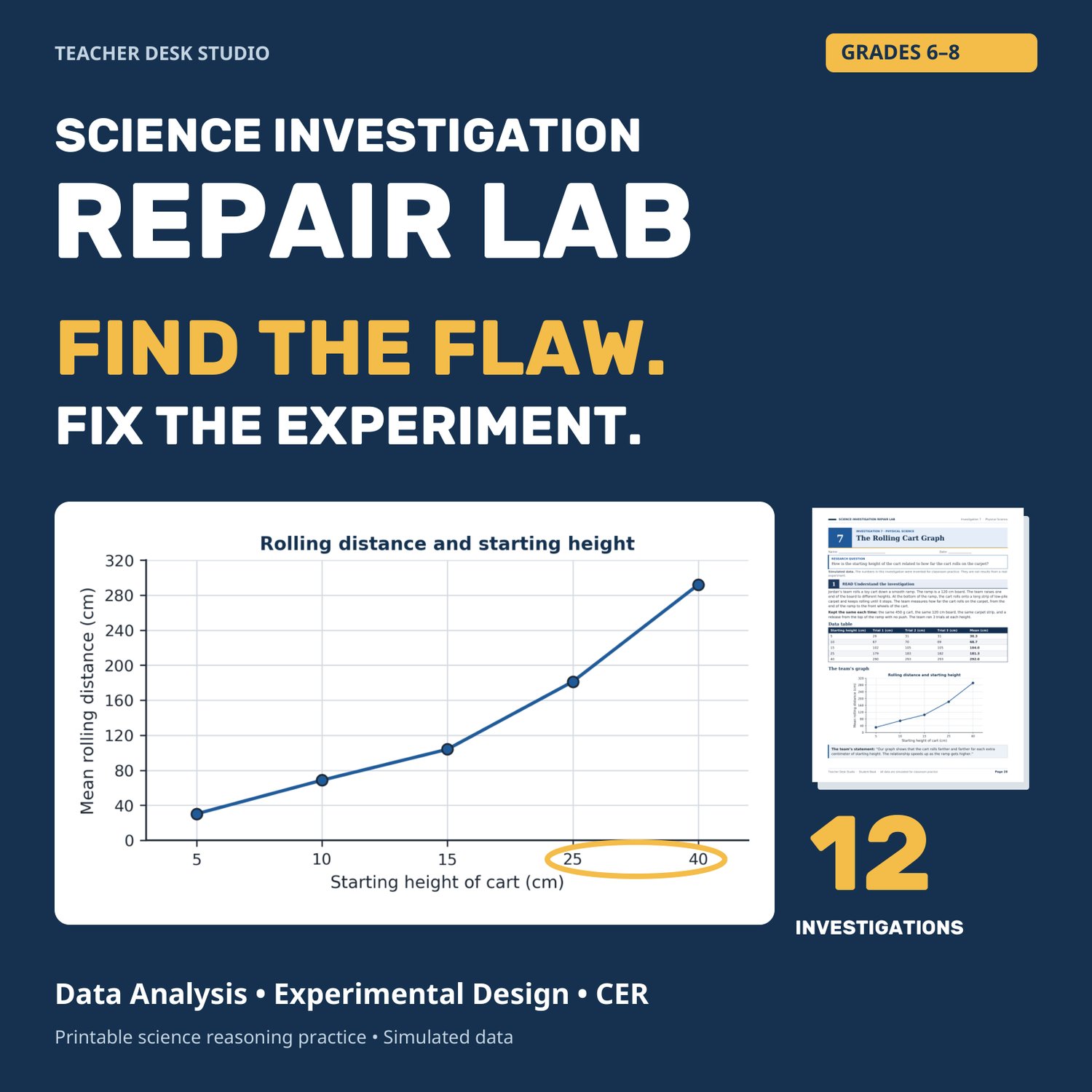
Looking for scientific method worksheets that go beyond identifying variables and memorizing steps? Give your middle school students a new way to practice scientific thinking with 12 investigation-based error analysis activities for Grades 6–8.
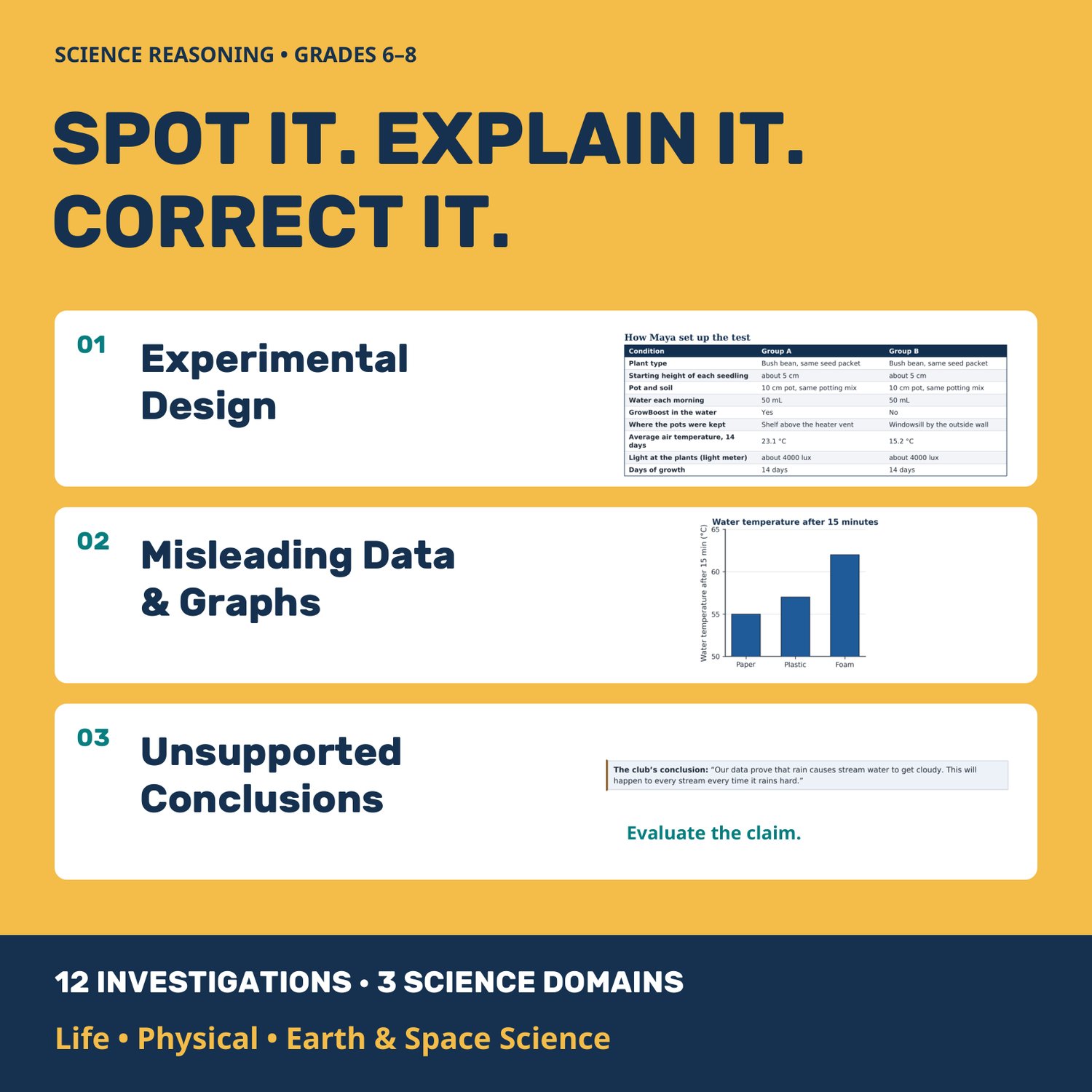
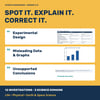
In Science Investigation Repair Lab, students examine flawed experimental designs, interpret graphs and simulated data, identify misleading conclusions, and use evidence to explain how scientific work can be improved.
Each investigation takes students through a consistent five-stage process:
READ → FIND → FIX → ANALYZE → EXPLAIN
Students learn to spot what went wrong, explain why it matters, and develop more defensible scientific conclusions using Claim-Evidence-Reasoning (CER).
WHAT'S INCLUDED
You receive three printable PDF resources:
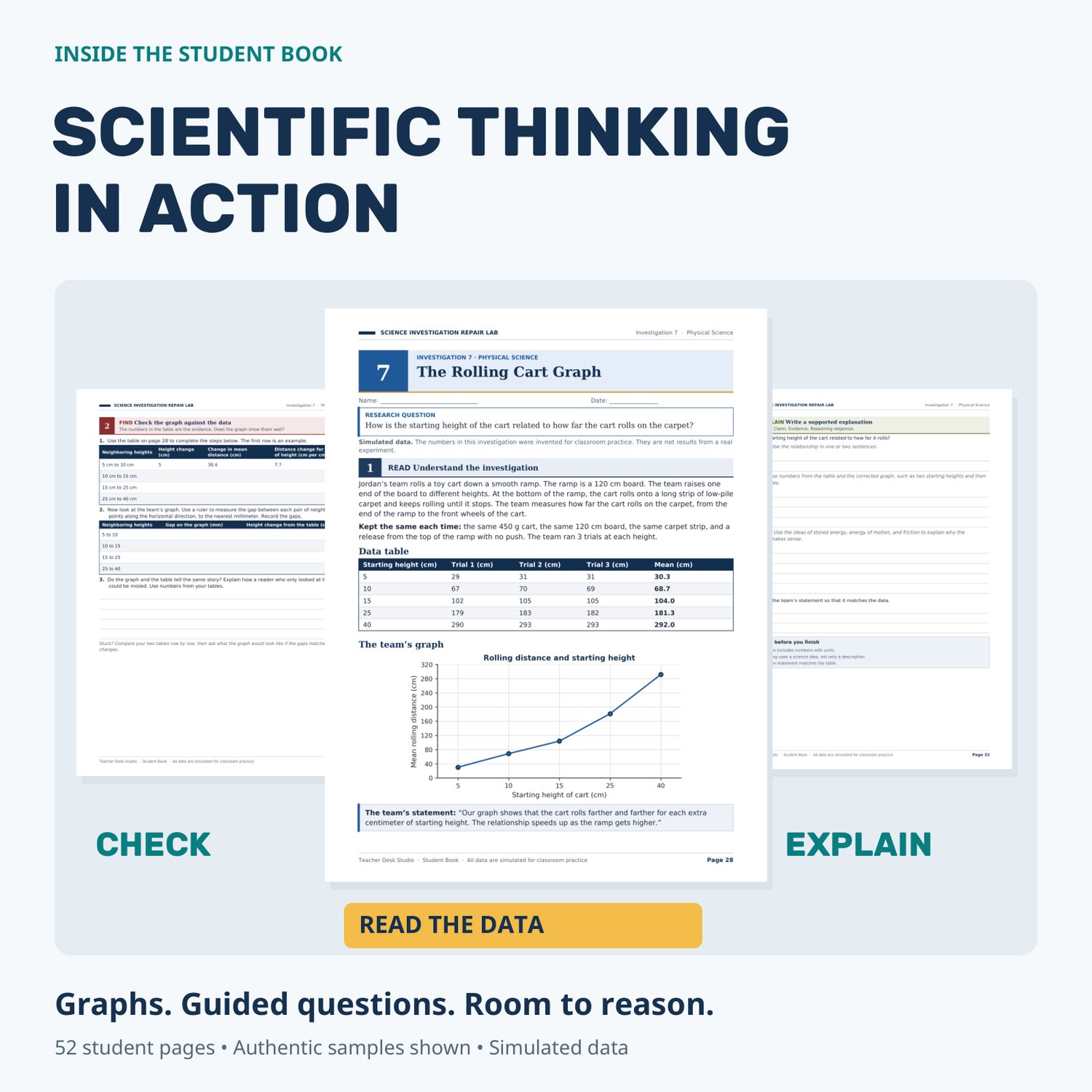
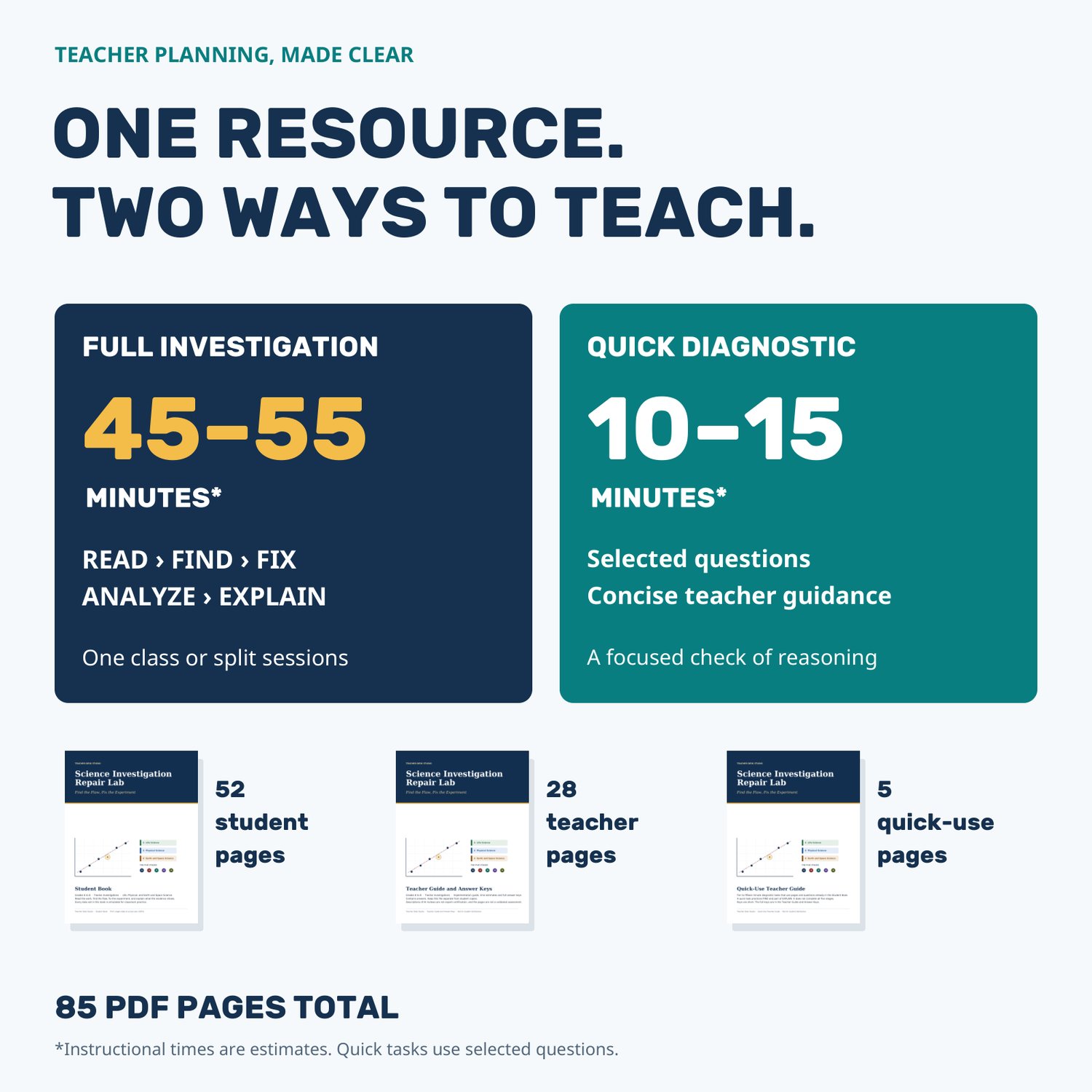
- 52-page Student Book: 12 complete investigations with scientific scenarios, data tables, graphs, guided questions, and student response spaces.
- 28-page Teacher Guide and Answer Keys: Implementation guidance, sample responses, scientific explanations, common misconceptions, and acceptable alternative answers.
- 5-page Quick-Use Teacher Guide: Short diagnostic tasks with exact Student Book page references, selected questions, and concise answer guidance.
85 PDF pages total, covering Life Science, Physical Science, and Earth & Space Science.
12 SCIENCE INVESTIGATIONS
Life Science
- The Plant Growth Mystery — Identify confounding variables.
- The Yeast Balloon Test — Recognize missing control groups.
- The Seed Sprout Report — Look beyond averages.
- The Earthworm Lawn Survey — Distinguish correlation from causation.
Physical Science
- The Paper Helicopter Test — Evaluate repeated trials.
- The Insulated Cup Comparison — Identify misleading graph scales.
- The Rolling Cart Graph — Correct inaccurate graph spacing.
- The Spring Stretch Rule — Examine predictions beyond tested data.
Earth & Space Science
- The Shadow Log — Evaluate inconsistent measurement conditions.
- The Beach Pebble Survey — Recognize sampling bias.
- The Warming Town Graph — Identify selective data presentation.
- The Rainfall Claim — Revise conclusions that go beyond the evidence.
SKILLS STUDENTS PRACTICE
- Scientific method and experimental design
- Independent, dependent, and controlled variables
- Control groups and fair tests
- Science graphing and data interpretation
- Repeated trials and sampling
- Identifying misleading graphs
- Observations versus inferences
- Correlation versus causation
- Evaluating scientific claims
- Writing evidence-based CER explanations
Students work with realistic scenarios and simulated scientific data. They must explain their reasoning, rather than simply select an answer.
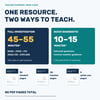
TWO WAYS TO USE THIS RESOURCE
Full Investigation: Use a complete case for an approximately 45–55 minute science lesson, or divide it across two class sessions.
Quick Diagnostic: Select the shorter 10–15 minute task identified in the Quick-Use Teacher Guide to practice a specific scientific reasoning skill.
These are suggested teaching times and may vary by class.
This flexible format works for middle school science skills review, small-group instruction, partner work, CER practice, graphing review, and targeted reteaching.
WHY TEACHERS MAY FIND IT USEFUL
One consistent routine: The five-stage structure helps students approach different scientific reasoning problems in a familiar way.
More than basic identification: Students explain errors, evaluate evidence, and propose improvements.
Cross-curricular science skills: The investigations cover Life Science, Physical Science, and Earth & Space Science.
Teacher guidance included: Detailed answer keys provide model explanations, alternative acceptable responses, and common misconceptions.
Flexible classroom use: Choose a full investigation or a shorter diagnostic activity based on your available teaching time.
IMPORTANT PRODUCT DETAILS
- Grades: 6th, 7th, and 8th
- Format: Printable PDF files
- Answer keys: Included
- Data: Simulated for classroom practice
- Materials: Pencil, with a ruler or calculator helpful for selected activities
- No hands-on laboratory equipment or physical experiments are included
- Files are not advertised as editable or self-grading
Please review the product preview to see actual student pages, graphs, questions, and teacher guidance before purchasing.
Give students opportunities to think like scientific investigators: find the flaw, evaluate the evidence, and explain a better approach.